
For people, summer has a special vibe of walks, trips into nature, and relaxation. But for pets, hot weather presents challenges. The bodies of dogs, cats, and other pets differ from the human body. They regulate their body temperature differently, react differently to overheating, and cannot say that they feel unwell.
That is why caring for animals in hot weather requires special attention. High temperatures affect not only mood or activity. Heat affects practically all organs and systems of the body. In severe cases, overheating leads to heatstroke. This is a dangerous condition that requires a quick response and veterinary assistance.
The Danger of Hot Weather for Pets
Care should be based on maintaining the natural body temperature of animals in summer, namely at the level of their physiological indicators:
- for dogs — 37.5–39°C;
- for cats — about 38–39.2°C.
However, animals are less effective at getting rid of excess heat. People cool their bodies through sweating, over the entire surface of the skin. In dogs, sweat glands work through the paw pads. Their main cooling mechanism is rapid breathing and the evaporation of moisture from the surface of the tongue and respiratory tract.
Cooling is even more difficult for cats. They practically do not use active breathing as their main method of thermoregulation. Most often, they:
- try to wait out the heat;
- find a cool place;
- reduce their activity;
- lick their fur.
Therefore, it is worth finding out in advance what to do if an animal is hot, learning to notice the signs of overheating in cats and dogs, and responding promptly in the event of heatstroke.
How Does Hot Weather Affect Animals?
High temperatures trigger a whole chain of changes in the body. The following systems are affected:
- Cardiovascular system. When the body overheats, the blood vessels dilate. The heart works harder to ensure blood circulation. The condition of animals with heart diseases may worsen.
- Respiratory system. Breathing is one of the main ways a dog’s body cools itself. However, in hot weather, this mechanism may fail to cope. The dog begins to breathe rapidly and shallowly and sticks out its tongue. If the overheating becomes more severe, breathing becomes laboured. Lethargy appears, and coordination is impaired. In cats, the cooling mechanism works differently. They breathe with their mouths open much less often. Therefore, rapid breathing or breathing with the tongue sticking out in a cat during hot weather is an alarming symptom. Special attention should be paid to animals with shortened muzzles. Brachycephalic breeds have a specific respiratory tract structure. Because of this, cooling is less effective. It is necessary to carefully monitor the signs of heatstroke in brachycephalic animals, such as pugs, Boxers, Pekingese dogs, Exotic Shorthairs, Persian cats, and Himalayan cats.
- Nervous system. Overheating affects the brain. High temperatures disrupt the transmission of nerve signals. The pet becomes lethargic, loses orientation, staggers while walking, and does not respond to commands.
- Kidneys and urinary system. Hot weather increases the risk of dehydration. When fluid is lost, the strain on the kidneys increases. A lack of water leads to a deterioration in well-being, thickening of the blood, and additional strain on the internal organs. Therefore, the question of how to give animals water properly in hot weather is key to summer care. Water should be available at all times; you should not wait until the pet asks to drink.
Signs of Overheating
Many owners notice the problem only when the animal begins to feel truly unwell. However, the body usually shows in advance that it is having difficulty coping with the heat. The main symptoms in dogs include:
- severe panting;
- excessive salivation;
- bright red or, on the contrary, pale mucous membranes;
- weakness;
- impaired coordination;
- vomiting or diarrhoea;
- loss of consciousness.
Signs of overheating in cats are usually less obvious. This has developed through evolution. Members of the cat family have always been forced to hide their weaknesses. You should pay attention to the following factors:
- refusal to be active;
- seeking out cold surfaces;
- rapid breathing;
- dilated pupils;
- lethargy;
- reduced appetite;
- an increased need for water.
Owners should know in advance how to protect a pet from overheating. If this could not be done, it is necessary to help the animal promptly, cool it down, and be sure to show it to a veterinarian. Even if everything appears to have returned to normal externally, there is a risk that the internal organs have been affected. It is better to be overly cautious than not cautious enough. Therefore, a veterinary consultation after overheating, and especially after heatstroke, is mandatory.
How Can the Risk of Overheating in Animals Be Reduced?
The main principle of summer pet care is not to try to cool the pet abruptly. It is better to help its body gradually cope with the high temperature. Some popular methods may seem logical at first glance but are actually harmful. For example, ice-cold water, a cold shower, or abruptly cooling an overheated body causes stress to the body. Therefore, it is important to understand how to cool animals without harming them and which actions really help.
How to Help a Dog in Hot Weather?
Dogs tolerate high temperatures differently. Active young animals continue playing even when their bodies are already under strain. All responsibility remains with the owner. Here are several rules that will help a dog cope with hot days more easily:
- move walks to cooler times of the day;
- avoid long runs, training sessions, and active games in the sun;
- always take water on walks;
- create a cool place at home.
At the same time, you should not experiment excessively with cooling mats for animals or damp bedding. They can harm the pet. The same applies to draughts and air conditioners.
How to Help a Cat in Hot Weather?
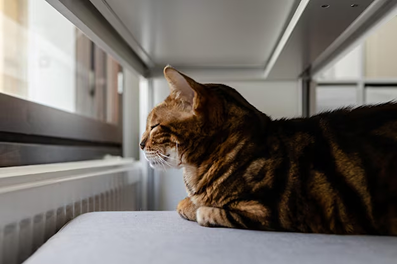
Cats quite deservedly seem more independent when it comes to comfort. They find cool places on their own, move less, and change their usual behaviour. However, this does not mean that they do not need help. The main recommendations include:
- provide access to several sources of water, especially if the cat eats dry food;
- change the water regularly and use wide bowls so that the whiskers do not touch the edges;
- look after the coat, brush it regularly, and remove shed fur.
At the same time, completely shaving the animal is not the best solution, as the coat participates in natural thermoregulation and protects the skin from negative external factors.
Animal Hygiene in Summer
It is worth remembering that summer brings not only hot weather but also additional everyday difficulties. There are more walks, dust, humidity, bacterial activity, and unpleasant odours. During hot weather, you should:
- wash bowls more often;
- keep pet beds clean, for example, with the Pets Corner spray from Step2Clean;
- remove dirt after walks;
- treat animals with anti-tick products;
- monitor the condition of the coat, skin, and paws.
Cleaning after unpleasant situations is especially important. Animals may experience motion sickness during trips to the countryside, severe overheating may cause vomiting, and no one is protected from typical emergencies involving puddles on the carpet. In these situations, specialised biological products from Step2Clean come to the rescue. For example:
- sprays that eliminate the odours of cat or dog urine will help get rid of marking stains and unpleasant smells;
- Step2Clean Cleaner For Hard Surfaces, an organic odour and dirt eliminating spray for hard surfaces, will help quickly clean the floor, tiles, or other surfaces where an incident has occurred;
- Step2Clean Carpet Cleanup, an organic stain and odour eliminating spray for carpets and upholstered furniture, is suitable for treating soft materials that absorb odours;
- for travelling in a car with a pet, it is worth buying Step2Clean Stain&Odor Remover for Auto, an organic stain and odour eliminating spray for car interiors, in advance.
Such an arsenal makes it possible to always be fully prepared. After all, the behaviour of animals in hot weather cannot always be predicted. But the main thing is their health, while the household consequences of unpleasant situations can always be dealt with through proper care and suitable products.
What Should You Do in the Event of Heatstroke or Overheating in a Pet?
Even with proper care, situations sometimes arise when an animal’s body cannot cope with the high temperature. The following are especially vulnerable during hot weather:
- puppies and kittens;
- elderly animals;
- overweight pets;
- animals with chronic diseases;
- long-haired and brachycephalic breeds.
If there are signs that the pet is feeling unwell, you need to act calmly but quickly:
- move the animal to a cool place;
- provide access to fresh water;
- begin gradual cooling.
You can:
- moisten the paws;
- carefully wet the fur with room-temperature water;
- use a damp towel;
- ensure air circulation.
At the same time, you must not cool the pet abruptly. Cold water or ice causes the blood vessels to constrict too quickly. Because of this, it becomes more difficult for the body to release heat. If the situation does not improve, contact a veterinarian immediately for emergency assistance. Even if the animal feels better, it is worth scheduling a consultation to rule out hidden consequences.