

Does your yard or garden look like a battlefield between people and pets? Has the neighbor’s dog or your own cat decided to turn it into a place for art installations? The smell of marks drives you crazy, and artistic scratches and stains on furniture don’t inspire admiration? It’s time to act.
And no, we’re not talking about ultrasound that drives both pets and owners insane. And not even about hot pepper that burns the eyes of animals and people. In the 21st century, fortunately, more humane, civilized, and most importantly effective methods have been invented. In particular, repellent sprays for dogs and cats AREXA.
However, before figuring out how the product works, choosing a cat repellent, or googling what smells dogs dislike, it’s important to get to the root of the problem. That’s what we’ll talk about next.
A brief note on veterinary psychology: animals mark, chew and scratch

Welcome to the world of pets. Here everything is as usual. The dog once again marks its favorite rose bush, the puppy won’t stop chewing the corner of a garden chair, and the cat leaves fragrant traces on the fence. Familiar situation, but let’s skip the hysteria. Animals don’t behave this way out of spite. Behind every action lies the biology and psychology of the pet:
- A natural way of communication. Dogs and cats leave marks to inform other animals about their presence. It’s like a veterinary Twitter. Marks and organic odors signal that the territory is occupied, show the animal’s status, or announce sexual readiness, especially in unsterilized pets.
- Exploration and stress relief. Puppies and kittens chew objects, including furniture, to explore the outside world. For adult animals it’s also a way to clean teeth or simply get rid of boredom. Proper care of the pet and enough safe chew toys are important here.
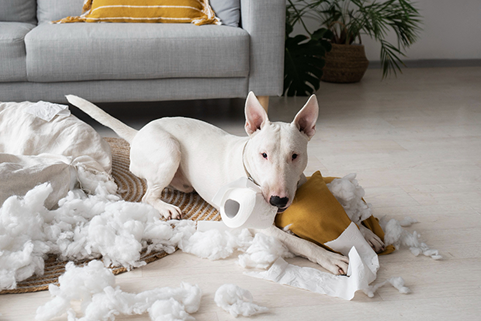
- Training, manicure, and territorial business card. Cats scratch furniture for three reasons. First, of course, sharpening claws. Second, marking territory with the scent from their paw pads. And finally, it’s a way to stretch and keep muscles toned. You can see this by looking at the arched back and paws at the moment of scratching.
- Stressful situations. Marks, chewed corners of furniture, and scratches on surfaces are ways to cope with stress, insecurity, or anxiety. Pets are not robots; they have feelings and personal psychology. Problems can appear or worsen when the environment changes, during conflicts with other animals, or due to lack of attention.
When it’s clear why animals do all this, it becomes obvious that scolding, punishing, or yelling is pointless. It only increases stress. You need to act smarter. And in this matter, repellents for dogs and cats from AREXA come to the rescue. What are these products and how do they work? Let’s sort it out.
Repellents for animals? What, science fiction?
Stop-stop-stop. It’s important to immediately put the dots above the “i”. When the word “repellent” is heard, the first thing that comes to mind is something toxic. Mostly products against mosquitoes, ticks, rodents, or cockroaches. Brr… That’s definitely not something you’d want to test on a pet. Fortunately, you don’t have to.
AREXA repellent is an absolutely safe product so that the dog doesn’t mark, and the cat doesn’t announce itself with scratches, stains, or unpleasant smells. The principle of action is that they gently but persistently dissuade the animal from unwanted places. A special aroma-zone is created where animals simply don’t want to enter. You don’t need to search for what smells cats or dogs dislike. It’s enough to buy the repellent and use it as directed, without worry or stress.
How does a repellent spray for dogs and cats work?
The AREXA product line is natural remedies created specifically to prevent animals from damaging things. Repellents are not magic and not a chemical nightmare. They are a tested combination of safe essential oils that gently form a forbidden zone for pets.
The composition of the product:
- Natural essential oils. Cinnamon, mint, garlic, lemongrass, castor oil. For humans these are pleasant or neutral aromas, but for dogs and cats they signal to stay away.
- Soap — for stability of the composition.
- Natural preservatives that keep the product effective for a long time.
All scents are absolutely safe; no need to worry about the health of the animal or surroundings. Unlike harsh chemicals, AREXA repellent does not cause stress, pain, or aggression. The product is suitable for outdoor use, in the yard or on the veranda. It can be sprayed on garden furniture, hammocks, fences, trees, and bushes. In short, on everything animals touch with their paws, teeth, or those same “fragrant” organic fluids.
Advantages of the repellent:
- safety;
- effectiveness;
- eco-friendliness;
- ease of use;
- possibility of regular application.
How to use AREXA repellents?
The principle of using the spray is simple and clear. The product for cats outdoors should be:
- shaken before use;
- evenly distributed from a distance of 30 cm;
- not wiped or dabbed.
During the first week, surfaces should be treated daily. Afterwards — one to three times a week, depending on the situation. This is the best way to stop a kitten from marking. Without hysteria, stains, or exhausting cleaning up after your pet.
Harmony at home with safe repellents

With AREXA products, the house, yard, and garden can be turned into a zone where everyone is happy and satisfied. Animals don’t damage things, and the owner gets cleanliness and order — without problems, difficulties, or unpleasant odors.
You can buy a product so that the dog doesn’t mark, the cat doesn’t scratch surfaces, or the puppy doesn’t chew furniture, at BPT-UA.com. Visit now. Here you really can find everything to get rid of marks, eliminate pet odors, remove stains, and simply maintain cleanliness in the apartment, house, yard, or garden.